Showing posts with label Film. Show all posts
Wednesday, January 11, 2012
Within Our Gates
Jane Gaines' essay "Within Our Gates: From Race Melodrama to Opportunity Narrative" interrogates the role of Oscar Micheaux's film Within Our Gates within the genre and historical context of race melodramas. Gaines troubles traditional understandings of race melodramas as films which primarily "[take] the question of visibility or invisibility of blood as part of [their] narrative investigation", and shifts it instead to a narrative with more fluid, blurred, focal points. Gaines argues that Micheaux's Within Our Gates (specifically) focuses on the parentage of its central character Sylvia as a means of interrogating the contemporary understanding of black-white sexual relationships, particularly in a pre-Civil War period. Gaines suggests that the fact that Sylvia's parentage is intently focused on in the film highlights the prevalence of rape and sex abuse in the pre-Civil War and antebellum periods. Gaines posits that this focus in the film, and the focus upon the suffering and betrayal of Sylvia, shifts the focus of Micheaux's film to the injustices and "social crimes" that African Americans faced at this time. Gaines argues that Micheaux does not so much change the form of melodrama to suit his purposes, but rather that he utilizes the genre to create these "opportunity narratives" which so effectively illustrate the social injustices of the period.
Gaines' article allowed me to understand Within Our Gates on a more technical level. Not having a great deal of experience with melodrama in film, I found it difficult to locate the nuanced use of the genre that Gaines identifies in Micheaux's work. In The Birth of a Nation, I certainly saw many of the generic characteristics she describes here, but her careful analysis of the differences in portrayal and focus in Micheaux's film cast light on the utilization of the genre to underscore social injustice. One thing I would like to take another look at is the scene Gaines analyzes in great detail (pgs. 74-75) in which Sylvia is attacked by her father, and the scar is discovered. The way Gaines explains it, the fact that Sylvia is both "raped" and "not raped" in this scene are equally compelling components to our reading. I suppose this connects to my question, so perhaps I will jump to that.
Question: Gaines' suggests that "new black feminist work...urges us to consider black women's respectability" and given this, it is important to understand that Sylvia being either/or "raped" and "not raped" in this scene is equally profound. How did you read this scene? Does it matter whether we are to interpret this as a scene of sexual assault? Did you feel that this was implied?
Labels:
Film
Monday, January 9, 2012
Friday, September 3, 2010
The Wilderness Downtown
I think this is probably the most beautiful thing I've seen/experienced in a very long time. At first I didn't know what to expect, but by the end I was in tears. Please give it a whirl (and use Google Chrome for your browser, as it's optimized for it). I won't explain any more than this, just because I liked being surprised. Just as a hint, I'll let you know that it'll make you fall even more in love with Arcade Fire...
The Wilderness Downtown
Tuesday, July 20, 2010
Wednesday, July 7, 2010
old things like all others
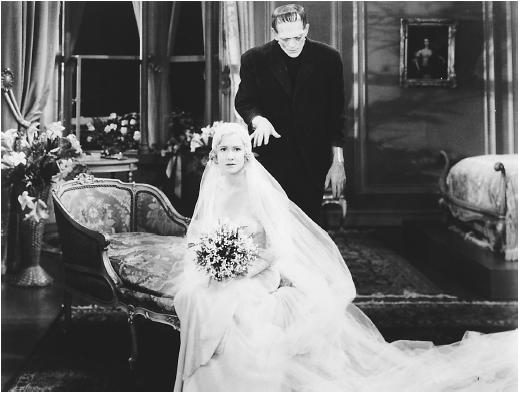
I've been immersed in old movies lately. The kind of old movies that nobody's really seen, and I've never heard of, and maybe you don't even have to see to get the gist of. Most recently I watched James Whale's Waterloo Bridge (1931). I found it in a boxed set called Forbidden Hollywood that featured several films that were banned or censored for their "racy" content. Waterloo Bridge was certainly the tamest of the bunch, but also, for me, the most passionate...and I guess "truest" in a sense. Anyway, Mae Clarke (you may have seen her in Frankenstein) plays the main character Myra, and she's got the most expressive and beautiful face--I had to constantly kick myself for thinking of Laura Mulvey every 10 seconds so I could just enjoy how pretty she was when she cried. Sometimes I forget to enjoy things when I'm so busy enjoying not enjoying them...er well...that's not exactly what I mean, but you English types will get that. But seriously, she has the prettiest crying face ever, and that's no easy feat.I couldn't find a picture of the crying, but check out how foxy she is in general.
and from Frankenstein:
It all makes me want to wear gauzy dresses and traipse through London alleys with a soldier boy and a grin.
Labels:
Film
Saturday, March 13, 2010
A Chairy Tale
I'm writing a term paper on Norman McLaren (due Monday, ugh), and thought I'd share a lovely short he made in 1957. His animation style seems standard now, but at the time was quite revolutionary. The music is by the amazingly famous and awesome Ravi Shankar, perhaps the most famous Indian musician ever--and definitely one of the greatest sitar players ever.
Here's the McLaren piece:
And "Within You Without You" a song by the Beatles with sitar music. This song was heavily inspired by Shankar's work, as George Harrison was a good friend and collaborator of Shankar's.
Here's the McLaren piece:
And "Within You Without You" a song by the Beatles with sitar music. This song was heavily inspired by Shankar's work, as George Harrison was a good friend and collaborator of Shankar's.
Tuesday, February 23, 2010
Behind-the-Scenes-Head
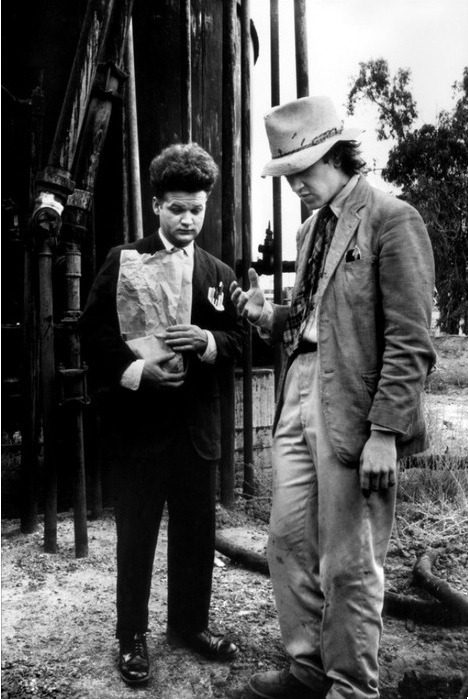
There are just so many awesome things going on here, I might have a kind of film-nerd flip-out if I tried to talk about them. Suffice it to say you absolutely must watch Eraserhead, even if only once. If you hate it, don't tell me about it. If you love/loved it, we'll gush. (By the way, this is David Lynch providing Jack Nance direction on the Eraserhead set, in case you hadn't picked up on that.)
Labels:
Film,
Photography
Friday, February 12, 2010
A Short History of Nearly Everything
An awesome flipbook project that, as the title says, shows everything.
It's fun.
It's fun.
Sunday, December 6, 2009
What I'm watching
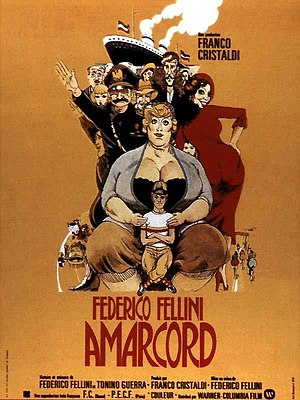
In addition to the papers I should be writing, I've been catching a few films here and there. Two recent ones were Federico Fellini's Amarcord, and Ingmar Bergman's The Virgin Spring. Fellini's film was riotous and hilarious, and made me want to buy vintage hats and romp around the cobblestone streets of Italy. Bergman's was dark, beautifully photographed, and haunting. It also featured one of the brutal rape scenes I have yet seen in a film (apart from Irreversible, which I cannot recommend you view, though it is important.) I enjoyed both of these films, though Bergman's made me want to hurt something at the injustice of it all.
Wednesday, December 2, 2009
Roles Revisited
Labels:
Film,
Photography
Saturday, November 14, 2009
And happy...
For my horror films class last summer, we watched both Frankenstein and Bride of Frankenstein. The wedding dress from the film was so elegant and wonderful. I've been thinking about that kind of floaty, ethereal quality of clothing that makes me feel both dainty and delicate, as well as completely old-world. Like a 20s flapper, tired after a long night of dancing, curling up to sleep on a velvet chaise wearing crumpled chiffon. I think I'll wear something gauzy tomorrow.
Neko Case--Never Turn Your Back on Mother Earth
Ivana XL--Ex. Oh.
Labels:
Film
Thursday, November 12, 2009
Cosmos

I just want to sit home and watch Cosmos all day. It was Sagan's birthday recently, and I realized then more than I ever have what a great loss it is that he isn't alive today. He was such a brilliant, wonderful man. Every photo I found of him when putting this post together showed him smiling and marveling at our universe. I imagine he was a deeply kind and intellectually piercing individual to interact with.
Wednesday, October 28, 2009
And typewriters...
Posting the scene from Marriage of the Blessed brought up in conversation with a friend another famously unusual typewriter scene from a film. In David Cronenberg's Naked Lunch, William Lee's (Burroughs') typewriter becomes a literal character. In fact, all typewriters are found to be living, alien-like entities. At first, we think it's the bug-powder...but then...not so much. It's all so eerie and strange and...Cronenberg. I loved this film, though it's not really an adaptation of Naked Lunch so much as a surreal imagining of the crazy inner-workings of William S. Burroughs' mind.
Anyway, a scene from the film:
And just for fun--a Burroughs pumpkin:

This film actually inspired me to buy a vintage typewriter of my own (whose name is, of course, Clark Nova). It looks very similar to this one:
Anyway, a scene from the film:
And just for fun--a Burroughs pumpkin:
This film actually inspired me to buy a vintage typewriter of my own (whose name is, of course, Clark Nova). It looks very similar to this one:
Tuesday, October 27, 2009
Ware for NPR
Chris Ware's video for this story from NPR's "This American Life" literally blew me away today. I've always admired him (certainly check out Jimmy Corrigan: The Smartest Kid on Earth). "This American Life" in general can be pretty powerful, as this one is, but adding Ware's artwork to it makes it...haunting.
Monday, October 26, 2009
Green Pink Caviar
Really strange video, though I think I like it. It sort of made me want to cover my monitor like I was watching something naughty--but then again, I was compelled to finish. Odd.
Friday, October 23, 2009
Green Porno
You should absolutely start watching Isabella Rossellini's short film series "Green Porno", available to watch at the Sundance Channel website here.
I've seen all three seasons, and I have to say she's completely brilliant. Ostensibly it's a series about the sexual habits and characteristics of various animals (insects, ocean creatures, you name it). It becomes so much more than that in the viewing. Rossellini, in donning the animal costumes and performing these sexual acts invites a completely new reading. Rather than a "simple" documentary film, her work becomes a complex relationship between information about nature and poetry that seems to revel in the intricacies and beauty of nature. Her dialogue is more lyrical than you'd expect, and what is titillating and exciting at first becomes moving and provocative as you continue.
It was difficult to embed the videos directly from the site, and YouTube had a limited selection of them to choose from. My favorite was the shrimp episode from Season 3 (so by all means, watch that one)--but here is another really great one:
I've seen all three seasons, and I have to say she's completely brilliant. Ostensibly it's a series about the sexual habits and characteristics of various animals (insects, ocean creatures, you name it). It becomes so much more than that in the viewing. Rossellini, in donning the animal costumes and performing these sexual acts invites a completely new reading. Rather than a "simple" documentary film, her work becomes a complex relationship between information about nature and poetry that seems to revel in the intricacies and beauty of nature. Her dialogue is more lyrical than you'd expect, and what is titillating and exciting at first becomes moving and provocative as you continue.
It was difficult to embed the videos directly from the site, and YouTube had a limited selection of them to choose from. My favorite was the shrimp episode from Season 3 (so by all means, watch that one)--but here is another really great one:
Thursday, October 22, 2009
Marriage of the Blessed
I just watched a film from my Iranian cinema course that was so great that I had to share. Marriage of the Blessed by Mohsen Makhmalbaf is visually arresting. It reminded me of the weirdest parts of Requiem for a Dream, and had this overwhelming sense of unease that felt much like David Lynch's work (particularly Eraserhead). The editing and cinematography of the film were astounding--relying on clever camerawork and match-cuts to make connections between Haji's modern, "civilized" surroundings and the war-torn, hostile environment of his thoughts and memories. It was hard to find footage or stills from this, as it's certainly a lesser known work, but this clip is exemplary of the style of "flashback" the film relies on.
The character I most sympathized and identified with was Haji's long-suffering fiancee/wife Mehri. She was both the strongest character in the film, as well as the strongest woman. She even had her own exhibition of photography--how cool is that?
Labels:
Film
Wednesday, October 21, 2009
The Road
I can't begin to tell you how excited I am for this film. I've literally been waiting for it (read: stalking film blogs) for over a year! Cormac McCarthy is an utter genius, and for the few years that I was a Creative Writing major, a total inspiration. His prose is succinct, brutal, and straight to the deep-down marrow of it all. The Road is, arguably, his best novel yet--and I still cannot read it without crying. And mind you, this isn't simply sniffling, this is wracking, chest-heaving sobs of complete loss and despair. Yeah, he's that good.
Anyway, the trailer for the film looks awesome:
What's just as exciting as the trailer is the soundtrack, which I've just heard was scored by Nick Cave. If you don't know him, please Google him. He's an incredible artist.
Here's the title theme from the upcoming soundtrack:
Subscribe to:
Posts (Atom)