Showing posts with label Book a Week Project. Show all posts

Sunday, May 9, 2010

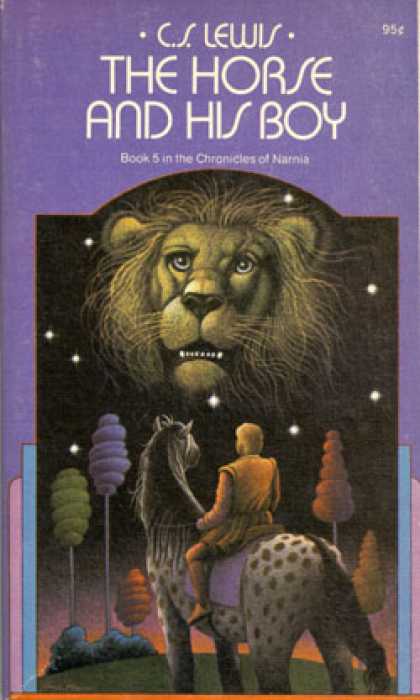
Book a Week Project: Book Six--The Horse and His Boy


I have to admit, I have never read the complete Chronicles of Narnia. Of course I've read The Lion, the Witch and the Wardrobe, as well as The Magician's Nephew (for some reason I assumed this came earlier...which it did in terms of lore, but not chronologically...). But to this day, The Horse and His Boy is only the third of the Narnia books I've finished. I suppose this is due to several factors--chiefly that I never owned all of the books, and then by the time I had the opportunity to buy the books for myself, I realized what they "were" and hesitated. I definitely loved the first book when I was young, but allegorical novels just don't sit well with me anymore. The Horse and His Boy, while primarily about what I do love (animals), is also dripping with Christ symbolism (and, what seemed to me, slightly racist undertones...). For the purposes of this review, however, I'm not going to address the allegorical intent (or lack of, as your opinion may be) of this book--rather I simply wish to address the themes I appreciated, the literary qualities and merits the book has, and the very real pleasure I experienced reading it. Because, despite everything else, it was a fun read!

Foremost in my mind is the emphasis on the relationship between Bree (the talking, Narnian horse stolen from Narnia as a foal) and Shasta (the young fisherman's son, washed ashore in a small boat as an infant and raised (basically) as a slave). The process through which Shasta learns to ride involves constant instruction (and chastising) from Bree, but also a good deal of care and, later, love and respect for one another. I appreciated that Bree repeatedly emphasized that he was a "free horse", and that in Narnia no horse belonged to anyone--hence the title, The Horse and His Boy. It's easy to say we "own" things...I mean, we say it all the time right? What's your cat's name? How old is your dog? But in actuality, how can we ever really own animals? In saying that, I'm not saying we shouldn't have pets (I love having kitties around my house), but that we should remember that animals aren't the same as staplers and computers and fancy pens with feathers on top. 

I see more thoughts and feelings flitting across cat's faces than I can begin to imagine--and maybe that's just the point. We want to connect with animals the way Shasta and Bree (and later, Aravis and Hwin) bond. I might say "If only I knew what was going on in his (the cat's) head right now...I bet he's imagining something really exciting." But really, the only connection we can have with animals is something significantly different than our relationships with other humans--it's something instinctual (primal?)--we connect with them because they make us happy, make us feel needed and loved and wanted.

Bree and Shasta need one another to escape "To Narnia, and the North!", and their bond centers on the continual evaluation of one another as peers and free "animals." I wonder how much of my own desire to know animals was piqued by this book, and how big of a role that desire played in my enjoyment of it. The climactic battle of the book didn't nearly interest me as much as the feeling of movement, or journeying I guess, towards a land that promised freedom and inclusion for two (and eventually four) mistreated creatures. 

I suppose I do love Aslan as well (because of the first book), but his appearances in this text were sporadic, and marked almost explicitly as either the miracle-working or punishment-doling of God. The punishment he bestows on the principle enemy of the book near the end is actually more harsh than I would have expected...and didn't really leave me feeling very connected to his character anymore. Oh well. 

Anyway, The Horse and His Boy is a fairly fast-paced, and certainly beautifully descriptive novel. The impetus for the book is an epic journey, so the compulsion to finish the novel and reach a resolution is strong (at least for this reader). It left me thinking, but also eager to bite into something a bit more substantial for next week. Stay tuned. 

Recommendation: Not high on my list for must-reads, but certainly good for something enjoyable, quick, and pretty. Also good if you like talking animals.


Monday, May 3, 2010

Book a Week Project: Book Five--The Book Thief


This week I've chosen another Young Adult novel for my BaW project--though it certainly wasn't the breezy read I was expecting. Markus Zusak's The Book Thief, is, without a doubt, one of the most harrowing and haunting holocaust narratives I have read. As you can see from the cover (not the cover of my edition, but a nicer one than I had), the primary figures in the novel are a young girl, Liesel Meminger, and Death. Yes, Death with a capital D, who happens to narrate the book. Initially I thought it a bold move to choose Death as the narrator of a holocaust story, but later realized just how perfect and powerful Zusak's decision was for this book. 

I think the most irritating (and simultaneously fascinating and moving) elements of the story was the use of foreshadowing. Throughout the text, Death hints at tragedy, plays with our expectations, and sometimes, when you least expect it, comes right out and tells you when a character you're reading about will die. This happens without warning, and in several instances involves an important character. Death will set up this elaborate image of the character, only to say something like this: 

***A SMALL ANNOUNCEMENT***
      ABOUT ____________________
He didn't deserve to die the way he did.
In your visions, you see the sloppy edges of paper still stuck to his fingers. You see a shivering blonde fringe. Preemptively, you conclude, as I would, that _____ died that very same day, of hypothermia. He did not. Recollections like those merely remind me that he was not deserving of the fate that met him a little under two years later.
I omitted the name of the person to die...so there wouldn't be any spoilers. But yeah, that "announcement" comes nearly 300 pages before the character actually dies. It kind of "ruins" the suspense, but also...I don't know...makes it more intense I suppose. It definitely makes every scene of that character after the fact more poignant and special, which is unusual for a novel. I literally have never seen a book with as much foreshadowing as this--and yet...I wasn't as bothered with it as I expected. At the end, I think it was the reason that this book made me cry.

Well, I still have a paper to write on this, so I'll come back to this response later on. I still have more to say, but time, as you can see, is not my friend. (Though maybe Death is).

Recommendation: Would recommend if you want a dense and sad book that's awesome. 

Sunday, April 25, 2010

Book a Week Project: Book Four--The Curious Incident of the Dog in the Night-Time


This week I wanted to shift gears again. I poked through a few friend's shelves and found Mark Haddon's The Curious Incident of the Dog in the Night-Time. Seeing that I'll be (gulp) teaching in the fall, I recognized that this book was part of the "Western Reads" program a few years back (where all of the incoming freshmen "read" the same book, and the 101 classes incorporate it into their lessons). Because of this, I knew it would probably be good, as the head of the Western Reads selection committee is kind of a mentor of mine, and a very intelligent woman. She has impeccable book taste. 

The book centers on the experiences of an autistic teenager shocked by the murder of a neighborhood dog, and spurred by that murder into an investigation that leads him to many new understandings. (Not going to give anything away here). This book was quite the page-turner. I realized on Thursday that I was barely fifty pages into my weekly book, and for awhile worried I wouldn't be able to finish. Picking it up yesterday, I couldn't put it back down, and finished it in a marathon reading session. 

The Curious Incident struck me first and foremost with the power and originality of its voice. The protagonist, Christopher, has difficulty perceiving and understanding emotions, subtleties, and figures of speech (among other things). This struggle between what is said and what is intimated (or hidden) becomes a key feature of the text. Haddon uses pictographs (ostensibly drawn by Christopher) throughout the text to connote this feeling of ambiguity:


While most of us could probably say with some certainty the emotions on each face, Christopher doesn't understand and is made uncomfortable by such things. The immersive quality of Haddon's writing also prompted me to question this ambiguity--how can we really know what others are thinking or feeling? More often than not, what we show on our faces is guarded or constructed, and may even be the opposite of what we are truly feeling. Being able to read emotions and understand nuanced situations seems like such an innate part of our existence, leaving us free to question "loftier" issues; but this book forced me to imagine (and inhabit) a situation where one cannot distinguish between baseline emotion and anger unless a person is shouting. Christopher seems trapped in a liminal space in which fundamental aspects of being human and communicating with humans is inhibited and, at times, impossible. 

Haddon's prose is also undeniably striking and original. Here's a shot of a particularly powerful page:


And the text from that page:

173. Between the roof of the shed and the big plant that hangs over the fence from the house next door I could see the constellation Orion. People say that Orion is called Orion because Orion was a hunter and the constellation looks like a hunter with a club and a bow and arrow, like this (see image).
But this is really silly because it is just stars, and you could join up the dots in any way you wanted, and you could make it look like a lady with an umbrella who is waving, or the coffeemaker which Mrs. Shears has, which is from Italy, with a handle and steam coming out, or like a dinosaur (see image).
And there aren't any lines in space, so you could join bits of Orion to bits of Lepus or Taurus or Gemini and say that they were a constellation called the Bunch of Grapes or Jesus or the Bicycle (except that they didn't have bicycles in Roman and Greek times, which was when they called Orion Orion).
And anyway, Orion is not a hunter or a coffeemaker or a dinosaur. It is just Betelgeuse and Bellatrix and Alnilam and Rigel and 17 other stars I don't know the names of. And they are nuclear explosions billions of miles away. 
And that is the truth.
The theme of space, and stars and scientific exploration/discovery are also prominent in the text, as these fields are where Christopher really shines. He loves nature programs and "maths" and physics. He can solve complicated equations that I can't even begin to understand (all of which Haddon carefully includes via diagrams and replicas of documents). This too seems like a relationship between what is uncertain (emotions, behaviors, strangers) and what is quantifiable and definite (and comfortable). I think we all have something in our lives we rely on when all else is up in the air, but the distinction between the concrete world of science and the more...flexible...realm of humanity is made explicit in The Curious Incident

I suppose to end, though I could go on and on about this book, I'll include one more passage, and a few bits of fan art relating to the text.

From the same section quoted above:

179. ...I felt safer in the garden because I was hidden.
I looked at the sky a lot. I like looking up at the sky in the garden at night. In summer I sometimes come outside at night with my torch and my planisphere, which is two circles of plastic with a pin through the middle...
And when you look at the sky you know you are looking at stars which are hundreds of thousands of light-years away from you. And some of the stars don't even exist anymore because their light has taken so long to get to us that they are already dead, or they have exploded and collapsed into red dwarfs. And that makes you seem very small, and if you have difficult things in your life it is nice to think that they are what is called negligible, which means that they are so small you don't have to take them into account when you are calculating something.

And the artwork:


Edit: Adding a new feature to my Book a Week posts: recommendations!

Recommendation: Read if you want a page-turning, sometimes sad, sometimes frustrating book. Quick, poignant read.


Saturday, April 17, 2010

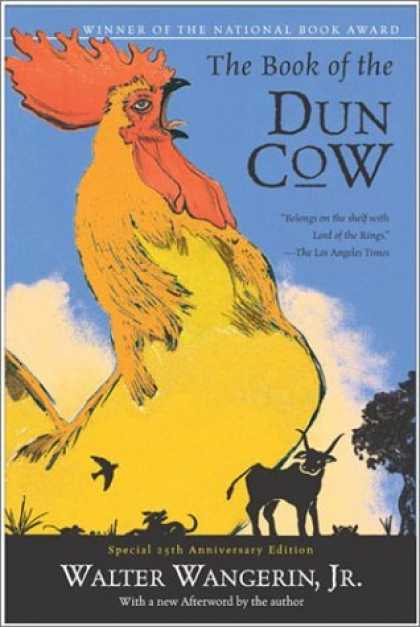
Book a Week Project: Book Three-The Book of the Dun Cow


This week I decided to read Walter Wangerin Jr.'s The Book of the Dun Cow for several reasons. First, and most importantly, based upon the recommendation of several people I trust implicitly in terms of book taste. Secondly because it won the National Book Award, and on the cover (front and back) is compared to The Lord of the Rings and Watership Down in terms of quality and importance. Needless to say, I was very excited to begin my reading, and was not at all disappointed.

I was deeply impressed by the incredible depth of characters and relationships in this text. I've read other books with anthropomorphic animals (Redwall, Poppy, The Lion, the Witch and the Wardrobe, etc.), and never before have I been so completely blown away by the way an author blended both the "animal-ness" of his characters with the "human-ness" that makes these such compelling stories. Rather than surrender the characters to one pigeon-holed, symbolic role (i.e. Animal Farm's characters), Wangerin created a world in which roosters could absolutely be both proud and kind, both skilled and empathetic leaders as well as flawed and imperfect individuals. Chauntecleer's strength as a protagonist, and the reason I found him to be such a sympathetic character, was not because he could easily handle any situation or because of any one quality, but that his innate "rooster-ness" and his undeniable "human-ness" simultaneously made him a powerful leader and an imperfect person. Rather than lean too heavily on one quality or the other (animal or human) Wangerin puts them into conversation with one another, and provides us with a powerful and singularly memorable protagonist. 

I knew that I loved Chauntecleer, and would absolutely love this book, from the moment I read this passage in which the variety of Chauntecleer's many crows is expressed:
...there was a whole set of crows which he used always at certain special hours during the day. These did come in due time; and these were called the "canonical crows." They told all the world--at least that section of the world over which he was Lord--what time it was, and they blessed the moment in the ears of the hearer. By what blessing? By making the day, and that moment of the day, familiar; by giving it direction and meaning and a proper soul. For the creatures expected his canonical crows, and were put at peace when they heard them. "Yes, yes," they would say, "the day is our day, because Chauntecleer has made it ours." That they would say in the morning, grateful that by his crow the day should hold no strangeness nor fear for them. And at noon: "The day's halfways over; the best part is still coming." It was a comfort to be able to measure the day and the work in it. (12)
Reading this book over the last week I've been thinking about animals a great deal. To what extent do these kinds of animal stories speak to a deeper longing we as humans have to "know" animals--to understand them beyond their biology and outward behavior. This quote seems to speak to that longing, especially in terms of a kind of hope that animals act on more than simple survival instinct--a desire for animals to have their own lives and hopes and small pleasures. Even as children we seem to want this; I remember distinctly crying over a dead bird not only because of his death but because he wouldn't be able to go home to his family. Wangerin's Coop establishes a microcosm in which we can observe, and participate, in the complex and beautiful lives of these creatures. A world in which every day is more than simply a ritual of food-gathering for survival, but a rich community of weddings and births, loves and small joys.

This book remains with me now, and I certainly have more to say about it. Yet I find myself held back a bit by my inability to articulate accurately my feelings towards the latter half of the text. The events which transpired between Chauntecleer, Mundo Cani and the Wyrm (and the Dun Cow herself even) resonated with me to such an extent that Mundo Cani's great act near the end of the book (I won't spoil anything) left me in tears. As I continue with other activities and readings over this weekend and the next week, I may come back to this post and extend my thinking as my own understanding and ideas complicate and develop. Suffice it to say, I was stunned and deeply moved by Wangerin's text, and I will add the sequel to this book The Book of Sorrows, to my reading list for this project. Look for it in the future!

I usually end my BaW posts with images for my texts...but as of yet no movie has been made for The Book of the Dun Cow. Instead...a rooster.


Saturday, April 10, 2010

Book a Week Project: Book Two--Neuromancer


I have to admit, I was a bit intimidated when picking up Neuromancer for my book choice this week. Having heard so much about this book for years, I wasn't sure what to expect. I've read snippets of William Gibson's prose before, and found it surprisingly abrupt, harsh and...specific...I guess would be the best word. I suppose I was initially thrown by that, especially coming from the past few books I've read (The Outsiders, Go Ask Alice), where the writing is much more fluid and free-form than this. Gibson's writing isn't pillowy or forgiving, it rips into you sentence after sentence:
The cultivation of a certain tame paranoia was something Case took for granted. The trick lay in not letting it get out of control. But that could be quite a trick, behind a stack of octagons. He fought the adrenaline surge and composed his narrow features in a mask of bored vacancy, pretending to let the crowd carry him along. When he saw a darkened display window, he managed to pause by it. The place was a surgical boutique, closed for renovations. With his hands in the pockets of his jacket he stated through the glass at a flat lozenge of vatgrown flesh that lay on a carved pedestal of imitation jade. The color of its skin reminded him of Zone's whores; it was tattooed with a luminous digital display wired to a subcutaneous chip. Why bother with the surgery, he found himself thinking, while sweat coursed down his ribs, when you could just carry the thing around in your pocket? (14)
After getting over my initial disconnect with Neuromancer's prose, I had to then contend with my utter lack of knowledge of science fiction lingo. Not that I haven't been a "fan" of science fiction, I really have nothing against it, but I've read woefully little of it. As soon as Gibson plopped me down in the gritty alleyways of Chiba City, I'm already so disoriented that it takes several chapters to even understand "jacking in" and "trodes", let alone the mechanics of ice and the evils of the AI. I think it was around a third of the way into the book when I finally found my feet and began to sift through the intricate storyline and "figure it all out." Even now, having finished the book, set it aside with a deep breath and contemplated it for awhile, I'm not certain I've got everything. Neuromancer seems like a book that needs to be picked up more than once--of that I am certain.

I suppose the thing that stuck with me the most in my first reading of this text is the degree of communication and connection with his "deck" that Case experiences. The most significant aspect of this, at least for me, is the appropriation of "The Flatline" as a personality, guide and driving force for Case's computer. At first, I didn't really understand--was the computer using Case's memories of Dixie (his voice and mannerisms, etc.) to simply put him at ease? After some discussion with a friend, I began to understand The Flatline as something more complex than that. He is a computer, certainly, and he is referred to as a "construct" on multiple occasions. And yet we also know by the end that he has his own desires--he wants to be destroyed. The Flatline occupies a space that is both organic and man-made, but occupies that space without expressing the conflict that traditionally accompanies such a position. At the end of the book, we understand that Dixie is not dead, but rather seems to have been freed into the matrix. I guess I'm not really sure what to think about him. Wintermute and Neuromancer, the two AIs of Tessier-Ashpool, also seemed to touch on this embodied machine concept--I'm sure there's some kind of master's thesis in there somewhere (probably already has been).

While I am glad to have finished my book for the week, I do think that with this project comes a set of limitations that will be frustrating in the weeks to come. It's a big goal, and I've acknowledged that, but pushing through Neuromancer to finish it within the week was challenging, and I fear may have affected the quality of my reading. The project also necessarily eliminates texts which are too long to be completed in a week, so my dreams of finally finishing Watership Down may have to wait. But I'll press on, and we'll see just how such a project can help me grow and develop as a scholar, and as an individual.

In the meantime, some Neuromancer pictures to dress up my post:

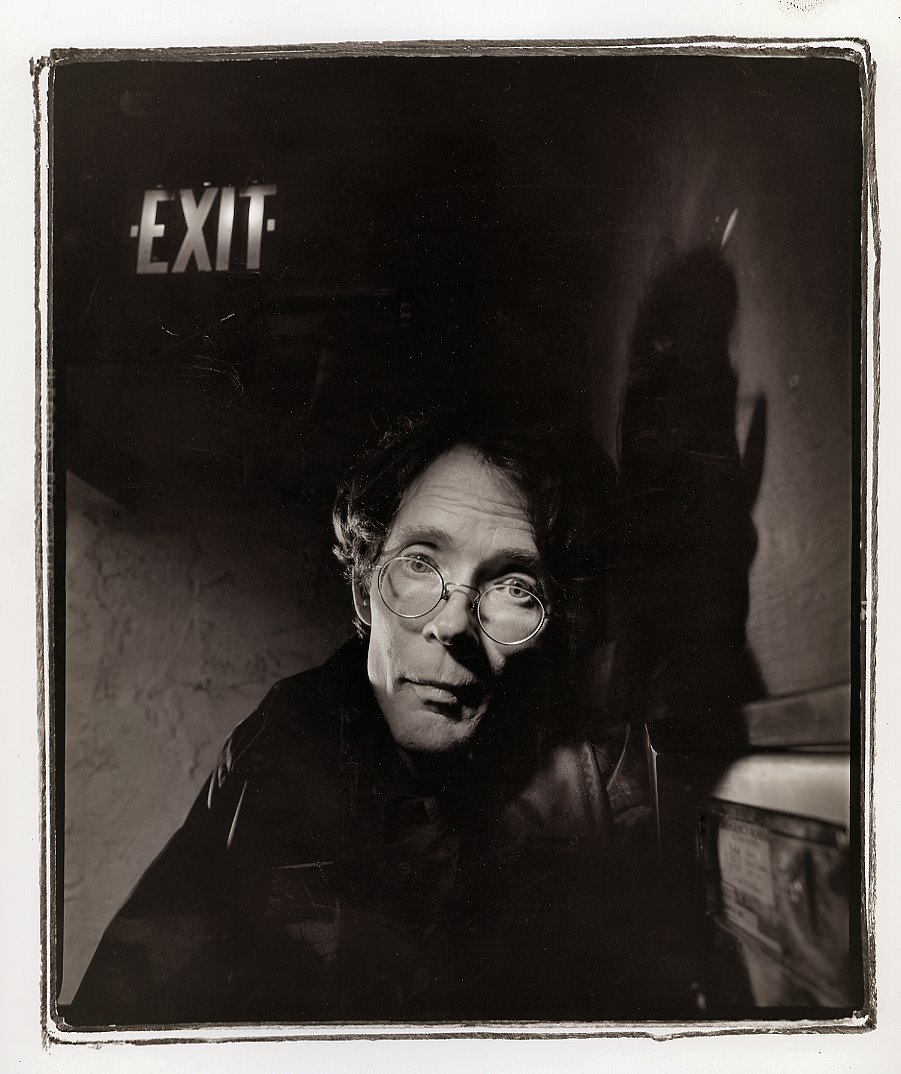
William Gibson himself.


The Neuromancer graphic novel.

And a final quote:

And he was remembering an ancient story, a king placing coins on a chessboard, doubling the amount at each square...Exponential....Darkness fell in from every side, a sphere of singing black, pressure on the extended crystal nerves of the universe of data he had nearly become....And when he was nothing, compressed at the heart of all that dark, there came a point where the dark could be no more, and something tore.

Sunday, April 4, 2010

Book a Week Project: Book One--The Outsiders


My first book for the Book a Week project is S.E. Hinton's classic young adult novel, The Outsiders. I'm taking a young adult literature class this quarter, and this was one of three books we could select to read for class discussion. I chose Go Ask Alice by Anonymous for my class discussions and writing, but bought Hinton's novel for kicks. I'd certainly heard about it, since it's been around for a little over four decades, but I'd never read it and have never seen the film.

I was drawn into the book from the very beginning--the main character, Ponyboy, has this natural way of drawing you in. His language and the vocabulary of the Greasers in general is so intriguing, and sometimes quite funny. I think the biggest issue I had with this book was that, for some reason, I was unable to get a good image in my head of what each character looked like. I kind of had an idea of what Johnny might be like, and Darry as well, but I just couldn't wrap my head around Ponyboy or Sodapop or the other boys in the gang. It took me until halfway through the book to remember that Ponyboy was a redhead! Usually I'm much better about that, but something about the book just kept me going without a real definite picture of the characters.

I guess that says something about the book as a whole. It's resonated with adolescents for such a long time, there has to be something in that. My wonderful young adult professor, Nancy Johnson, told us all that in order to read young adult fiction and understand it in any real way, we had to respect the audience it was intended for. S.E. Hinton was only 15 years old when she wrote The Outsiders, and only 16 when it was published. She wrote it as an expression of the tension and fear surrounding gang violence in her own community, and yet as I read I found myself extending the conflicts in the book to encompass a more broad theme of teen violence and anger. Coming from a background in which class differences were not as openly critiqued, I still was able to understand the relate-able quality of Hinton's characters to teen readers. Maybe we're not beat up by our parents every day, but certainly we question whether or not we are truely loved, whether we can really trust our friends or surroundings, and wonder if we're really cut out for such a harsh world. The more I think about the novel now, I really see strong correlations between Ponyboy's doubt regarding his brother Darry's love for him, and my own issues with trust that I've harbored since puberty.

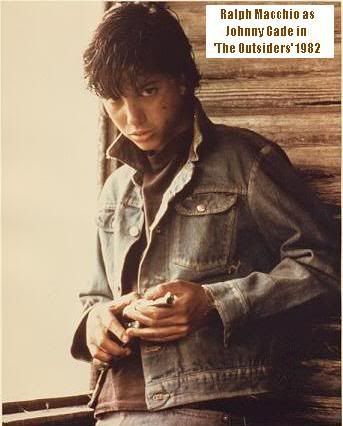
I feel like seeing the film version, reputed to be quite good, would be a great way to enrich my reading of this text. Looking at stills and promotional materials now, I really have to see it. I mean...Patrick Swayze, Emilio Estevez, Tom Cruise...the list goes on. And from what I can tell, the guy who played Johnny Cade is a real cutie (and very much how I pictured him). Anyway, it's a great book. Good start to the project!


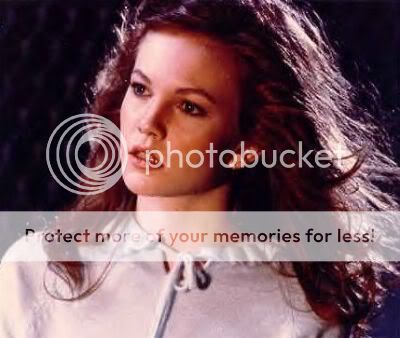
Oh, and check out how cute Diane Lane is as Cherry Valance:


A Book a Week Project 2010


I've decided that with this new exciting happening in my life (grad school), I'm going to start a new and exciting project that will, hopefully, make me a better and more well-rounded person. I certainly don't feel like I have tons of time to kill in my social life, but I do think that much of that time has been spent doing things that in no way make me smarter, kinder, more worldly--only more broke. Therefore, from this week on (for a year) I plan to read one book every week. As an English major I already read several books a quarter, but I hope to have these books be an addition to what I'm assigned. If (during dead week or final's week) I'm just too burned out to add another book on the pile, I'll count a book I've been assigned and have finished very near that date. Only in emergencies though. I want to have read at least 52 books by one year from today. That may not sound like very much, but the statistics are actually surprising. According to the Washington Post, only about 57% of Americans read any books in a given year. Among those people, they read an average of 9 or fewer books in a year. Nine books. I know I read more than that, but I can't help but think what a shame it is that I don't read more than I do now.

So I'm rectifying that situation today!